
A duo of delights in the 250th anniversary exhibition at the Albertina: stories and insights across the history of the collection and breathtaking works of art.
- See Dürer’s Young Hare
- ..and other masterpieces
- Rembrandt, Schiele, Bruegel etc.
- The whos, whats and hows of a collection
- Runs Jun 19 – Oct 11, 2026
- Book Albertina tickets*
- See also:
250 years strong…
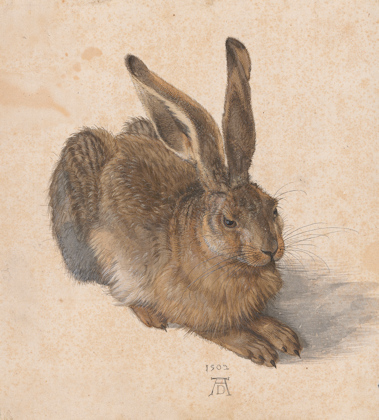
(A rare sighting: Albrecht Dürer, Young Hare, 1502; 25 × 22.5 cm, watercolour, body colour, heightened with opaque white; press photo © The ALBERTINA Museum, Vienna)
The Albertina art museum bears more than a passing resemblance to a historical palais. Largely because that’s exactly what the building is.
Back in 1776, the future owners of that palais (Duke Albert of Saxe-Teschen and Archduchess Marie Christine) received a large collection of graphic works from the Austrian Ambassador to Venice: Count Giacomo Durazzo.
Little did Durazzo, Albert or Marie Christine know that this would mark the beginning of what is now the prestigious collection of today’s Albertina art museum.
But how did we get from a few thousand engravings in an 18th-century aristocratic collection to c. 1.2 million museum works that include many globally-important masterpieces?
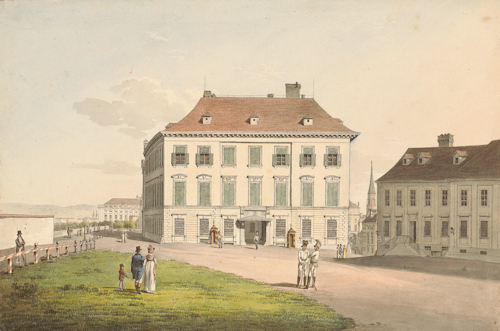
(Jakob Alt, Das Palais Herzog Alberts, 1816, 27.4 x 40.8 cm, pen and ink, watercolour; press photo © ALBERTINA, Wien)
The answer comes in the form of the Albertina’s 250th anniversary exhibition.
Collecting for the Future provides a chronology of 250 years of acquisition and purpose. And all illustrated by art that marks key moments in that history.
So we discover, for example, the critical role played by Marie Christine’s interest (and money) in the early days of the collection.
We even see a few of the Archduchess’s own works, which are really rather good. And one of Albert’s. Let’s just say that horses were not his forte. To be fair, his artistic training was more about drawing up battle plans than sketching equine scenes.

(Michelangelo Buonarroti, Male Nude Seen from the Back, c. 1504, 19,6 × 27 cm, black chalk, heightened with white; press photo © The ALBERTINA Museum, Vienna)
The history and evolution of the collection and the Albertina institution certainly make for excellent subject material. But the works illustrating the tales and information are the cream on the cake.
And by cream, I mean a delicious layer of culinary heaven in art form.
Towering head and shoulders above everything is, of course, Albrecht Dürer’s Young Hare. An animal that makes only rare public appearances every five years or so: catch it while you can.
The hare enjoys able support from numerous other joys, including more by Dürer.
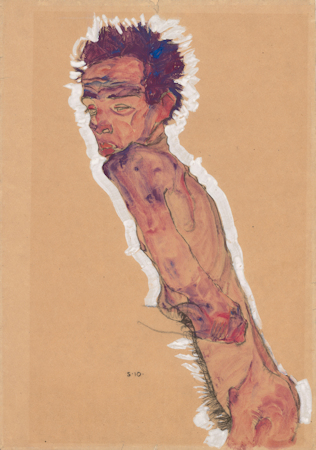
(Egon Schiele, Self-Portrait Nude, 1910, 45 × 31.8 cm, black chalk, brush, watercolour and bodycolour; press photo © The ALBERTINA Museum, Vienna)
Here a flower study by Manet, there a painting by Schiele.
Drawings and prints by the likes of Michelangelo, Rubens, Rembrandt, Raphael, Bosch and Bruegel.
A Cezanne watercolour and a van Gogh sketch in pen and ink.
A Klimt study in pencil and a Kollwitz self-portrait.
The list goes on…you can only marvel at the brilliance on display.
Final rooms have a site-specific special installation created by Rosa Barba. The rolling strips of film prove quite mesmerising, and I found myself staring at them longer than at works by my favourites from the Renaissance: a fitting end to the exhibition.
Dates, tickets & tips
Peruse 250 years of world-class collecting from June 19th to October 11th, 2026. An entrance ticket for or from the Albertina includes the special exhibitions inside.
(Booking service provided by Tiqets.com*, who I am an affiliate of)
Collection highlights and aristocratic origins are themes elsewhere in the Albertina.
The staterooms, for example, offer insights into palais life and history. And the permanent Monet to Picasso exhibition contains numerous famous names: as its title suggests…from Monet to Picasso.
If the Young Hare has you purring about Dürer, pop over to the Kunsthistorisches Museum for more of his work. And the Upper Belvedere and Leopold museum locations are excellent choices for Klimt and Schiele.
Rarely-seen creative joys are a theme over at the MAK museum, too: their Glanzstücke exhibition runs until September 27th, 2026 and features glorious jewelry from Van Cleef & Arpels alongside masterpieces from the MAK’s own design collection.
How to get there
The Albertina is in central Vienna at the edge of the old town. See the overview page for travel tips, but the nearest subway stations are Stephansplatz (U1 and U3 lines) and Karlsplatz (U1, U2 and U4 lines: look for the Oper exit).
Address: Albertinaplatz 1, 1010 Vienna