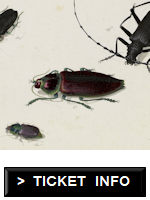
The Naturhistorisches Museum’s 150th anniversary exhibition presents its work and history, but also highlights different perspectives on the value and ethics of collections and collecting.
- Lots of insights into the roles and activities of a natural history museum
- Some intriguing exhibits
- A nuanced, self-critical approach gets you thinking
- Runs April 28, 2026 – Jun 27, 2027
- See also:
An anniversary exhibition
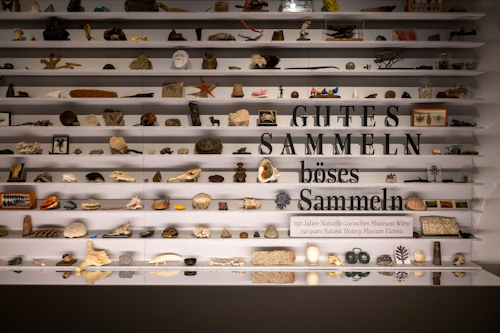
(The entrance gallery © NHM Wien; photo: Chloe Potter)
At the end of April, 1876, Emperor Franz Joseph took hold of what was presumably a very expensive pen and brought the Naturhistorisches Museum to life with his signature.
150 years seems like a suitable anniversary to celebrate, and the museum does it in the form of a special exhibition: Good Collecting, Bad Collecting.
The exhibition looks back at the origins and history of the museum’s collections, and it lifts the lid on life as a natural history museum.
Although the displays communicate the joy and importance of collections and collecting, they also take a more nuanced, self-critical approach.
So we see a range of perspectives on the acquisition and presentation of natural objects from around the planet. And discover the darker sides to a museum’s past.
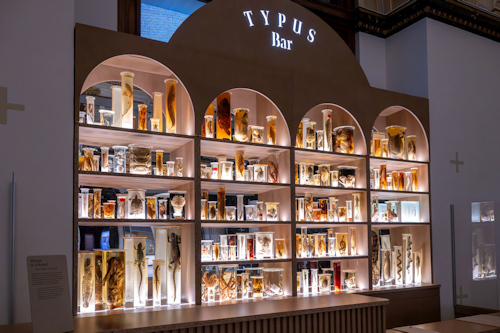
(Preserved specimens © NHM Wien; photo: Chloe Potter)
The opening galleries provide a swift overview of the history of the collections, which actually date back to the days (and efforts) of Empress Maria Theresia (1717 – 1780) and her husband, Emperor Franz Stephan (1708 – 1765).
Objects accompanying this history include some with a notable importance or an eyebrow-raising background. Like the piece of pyramid stone simply plucked as a souvenir during the 1869 opening of the Suez Canal. (How times change.)
Some artistic positions and presentations also add creative commentary on, for example, the existence of no women among the 35 statues of scientists on the museum’s roof.
A large gallery then tackles the theme of collecting and collections per se with individual stations covering such topics as:
- The value of both historical and contemporary items for research
- Preservation, preparation and presenting techniques
- Acquisition sources and stories
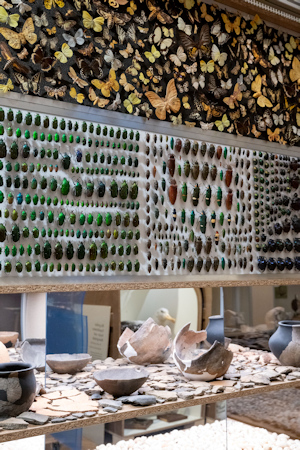
(The “diversity, not uniformity” station © NHM Wien; photo: Chloe Potter)
This reveals the astonishing breadth of the museum collections (containing around 30 million objects), their usefulness, and their remarkable historical and scientific significance.
At the same time, the exhibits raise issues around acquisition histories and provide insight into the associated complex of ethics, morals, and scientific imperatives.
Another gallery then uses individual items to illustrate different views that can be taken on natural objects in a museum, where right and wrong are sometimes obvious and sometimes a matter of opinion. Interpretations of value and meaning can change dramatically with your perspective.
That last gallery in particular encourages you to think about the tradeoffs made in museums, where a stuffed bear may serve an educational or research purpose but was also once a living, breathing, sentient individual. And one perhaps collected in opposition to what we would describe as ethical today.
And in among all this thoughtful celebration you find some rather lovely displays, too. Like the “diversity, not uniformity” column pictured above.
Dates, tickets & tips
Enjoy the presentations and perspectives from April 28th, 2026 to June 27th, 2027. An entrance ticket for the museum includes the special exhibition.
For some more perspectives on historical collections away from the art world, perhaps consider:
- The Weltmuseum ethnographic museum, which faces similar themes in terms of the ethics of historical acquisition methods
- The Josephinum, which takes you on a journey through the evolution of modern medicine
How to get there
Check out my page for the museum for travel tips, but it’s close to the central Volkstheater subway station on the U3 line, for example.
Once inside, look for the exhibition on the next floor up and off to the left as you come into the entrance hall.
Address: Burgring 7, 1010 Vienna